


Precision CNC Machining of Engineering Plastics

Precision CNC Machining of Engineering Plastics: PEEK, Ultem, PTFE, Delrin & G-10
TL;DR – Article Takeways & Notes
- American Valmark is a Texas CNC machine shop that specializes in CNC machining of engineering plastics including PEEK, Ultem, PTFE/Teflon, Delrin, and G-10 for use in semiconductor, precision electronics, defense, and industrial applications.
- Engineering plastics require different machining strategies than aluminum, stainless steel, or other metals due to heat buildup, material shifting, workholding issues, dimensional instability, and tool wear.
- Each thermoplastic or fiberglass-reinforced epoxy (G-10) requires a material-specific machining approach that includes specific changes to tooling, feed and speed rates, workholding, machining sequencing, and inspection protocols.
- American Valmark can machine both metals and engineering plastics, giving OEMs with complex, mixed-material assemblies an advantage where dimensional relationships and mating surfaces must be precisely controlled.
Quotes for CNC Machined Engineering Plastics
Why Engineering Plastics Require a Different CNC Machining Approach
Precision CNC machining centers are not limited to aluminum, stainless steel, titanium, and other hardened alloys. Many OEMs have opted to transition production of specific parts or components to specialized polymers and engineering plastics because of their unique electrical, thermal, mechanical, and chemical properties. These characteristics make CNC-machined engineering plastic parts a perfect fit for semiconductor equipment, precision electronics, medical assemblies, defense equipment, and other industrial applications.
The team at American Valmark noticed this shift towards engineering plastics and has adapted equipment, capabilities, and processes to provide precision CNC machining services for engineering plastics, including PEEK, Ultem, PTFE, Delrin, and G-10. That said, these materials do not respond to the same machining strategy as metals or alloys and require a more delicate and refined approach to achieve tight tolerances and precision parts.
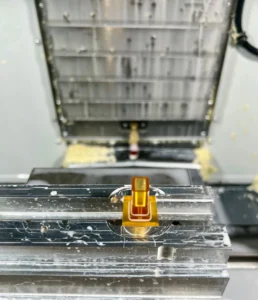
Machining Differences Between Plastics & Aluminum or Stainless Steel
A CNC machining center or workflow process that routinely delivers tight tolerances on aluminum or stainless steel does not automatically guarantee the same results in an engineering plastic. The material properties are drastically different and require a unique approach to achieve similar results.
Metals are generally more rigid during machining, whereas softer or more flexible plastic polymers can move under cutting forces and deform when excessive workholding pressure is applied. Due to this, the experienced machine operators and engineers at American Valmark make several changes to the machining process to produce parts from engineering plastics.
Workholding Adjustments
Soft plastics such as PTFE will flex or distort if clamped too aggressively. When an aluminum or titanium block can be securely fastened for machining, operators must use precise workholding equipment to secure engineering plastics without altering dimensions or damaging the material.
Proper Heat Management
Plastics react differently to the heat generated during cutting than metals. Excessive temperatures can cause thermal expansion, localized softening, warping, or even movement during machining. Carefully refining and adjusting tool selection, cutting parameters, and machining sequencing can help reduce unnecessary heat buildup.
American Valmark manages heat through proper tool selection, optimized feeds and speeds, and effective chip evacuation. Because excessive heat can cause engineering plastics to expand, distort, or affect dimensional accuracy, our machinists adjust the machining strategy based on the specific material, part geometry, and tolerance requirements.
Feeds, Speeds, & Tooling
This facet of production closely intersects with proper heat management practices and determines final part quality and consistency. Tool geometry, spindle speeds, feed rates, depth of cut, and chip removal are just as meaningful for machining engineering plastics as they are for metals. Materials like G-10, for example, have a fiberglass reinforcement that is considerably more abrasive on cutting tools than metals or even other thermoplastics.
As engineering plastics are more challenging to work with and can expand during machining, additional inspection is needed to ensure all part dimensions and tolerances are in line with customer specifications. Tight-tolerance plastic machining requires an inspection strategy that is both appropriate for the material properties as well as the specified end dimensions.
In-Process & Final Inspection
American Valmark performs in-process and final inspection based on the part’s tolerance requirements. Because engineering plastics can respond differently to heat and machining stresses, dimensions are monitored throughout production, and parts are allowed to stabilize when necessary before critical measurements are verified. Precision measuring equipment is selected based on the feature, tolerance, and material being inspected.
Comparing Engineering Plastics & Machining Challenges
Each engineering plastic presents a unique set of challenges during machining, and depending on the end application, CNC machining processes should adapt to ensure each part meets specific quality and design requirements. This chart compares the most frequently machined engineering plastics and the specific challenges faced during production.
| Material | Common Characteristics | Key Machining Considerations | Potential Applications |
| PEEK | High-temperature resistance, chemical resistance, strength, dimensional stability | Heat management, tooling selection, dimensional control | Semiconductor equipment, precision electronics, defense systems, industrial components |
| Ultem / PEI | High strength, electrical insulation, heat resistance | Heat buildup, internal stress, cracking or distortion | Electrical components, fixtures, semiconductor equipment, aerospace and defense applications |
| PTFE / Teflon | Chemical resistance, electrical insulation, low friction | Flexibility, material movement, workholding pressure, dimensional stability | Insulators, seals, fixtures, semiconductor and electronics components |
| Delrin / Acetal | Low friction, good machinability, dimensional stability | Heat control, chip evacuation, maintaining precision features | Bushings, fixtures, electronic equipment components, industrial assemblies |
| G-10 | Electrical insulation, strength, rigidity, fiberglass reinforcement | Abrasiveness, tool wear, dust and debris control | Electrical insulation, electronics, defense equipment, fixtures and structural components |
It is also important to note that while these can be broadly classified as “engineering plastics,” there are small variations that an experienced machine shop will understand before starting a production run. PEEK, Ultem, PTFE, and Delrin are all considered thermoplastics or thermoplastic resins offering similar machining challenges and performance expectations. G-10 is an outlier and is a fiberglass-reinforced epoxy laminate that is more difficult to machine due to the abrasive nature of the fiberglass.
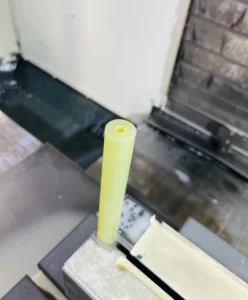
CNC Machining Plastic Components from PEEK, Ultem, PTFE, Delrin & G-10
American Valmark approaches each engineering material with the individual care and treatment they deserve rather than approaching “engineering plastics” as an all-inclusive material category with similar properties. This becomes increasingly important for complex plastic parts with tighter tolerances, thin walls, precision holes, surface uniformity, or geometric features that can be impacted by workholding pressure or material movement and changes.
Our machinists evaluate several factors before, during, and after machining engineering plastics to ensure each part meets specific requirements.
- Material properties and machining stability
- End component geometry
- Specified tolerances
- Cutting tool selection
- Cutting tool feed rate and speed
- Potential for heat generation
- Appropriate workholding
- Machining sequencing
- Inspection requirements
- Interaction with additional components or sub-assemblies
Common Machined Engineering Plastic Parts & Applications
Engineering plastics can be machined to create a large number of the same part designs traditionally produced from metals and alloys, but in a lighter weight and with some additional resistance levels. Although engineering plastics do not always carry a lower material cost compared to metals or alloys, the long-term cost benefits can be made up for through reduced manufacturing costs and finishing requirements. Production costs should be examined on a case-by-case basis, as material choice, volume, part size, and end application all impact final pricing. Our experience machining engineering plastic parts includes:
- Precision equipment fixtures
- Electrical insulating components
- Interfaces and supports
- Specialized tooling
- Bushings, bearings, and wear components
- Mixed material assemblies
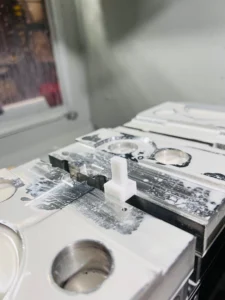
Mixed Material Machining Projects: Combining Metal & Plastic
One of American Valmark’s strongest advantages over other machine shops or plastic machining companies is that we’re comfortable working with metals and specialty engineering plastics simultaneously. Given our work in the semiconductor, defense, or precision electronics industries, we’re used to the varying requirements specified by customers and the challenges that arise during mixed material machining jobs.
This type of work requires more than just best machining practices for individual materials. This requires a deep knowledge of dimensional relationships, mating surfaces, tolerance accumulation, material movement, and how to properly inspect multiple materials and tolerances across a complete assembly.
Frequently Asked Questions About CNC Machining Engineering Plastics
What’s the difference between machining plastics and machining aluminum?
Engineering plastics are prone to flexing, thermal expansion, moving during machining, or deforming under excessive workholding pressure. While aluminum presents its own set of machining challenges, engineering plastics require a more concerted effort during machining to avoid complications that lead to rework or material waste.
What engineering plastics does American Valmark routinely machine?
American Valmark regularly machines PEEK, Ultem, Delrin, PTFE/Teflon, and G-10 parts, working with clients on early prototypes that transition seamlessly into production-ready functional designs.
Can PEEK, PTFE, or Delrin be machined to hold tight tolerances?
Yes, PEEK, PTFE, and Delrin are well suited to tight-tolerance machining, provided the machinists tightly control heat, cutting forces, tooling, workholding, and post-machining inspection processes.
If G-10 contains fiberglass, can it still be considered an engineering plastic?
Yes, even though G-10 is reinforced with fiberglass, it is classified with other materials as an engineering plastic due to the desirable properties that are useful for parts in the electrical, semiconductor, industrial, and defense sectors.
Can you machine plastic and metal parts for the same assembly?
Yes, this is one of the features that sets American Valmark apart from other plastic machining companies. We understand the best machining practices for metals, alloys, and plastics, often combining these approaches into a single project. We understand that each material needs a different approach when it comes to tooling, workholding, feeds and speeds, and even inspection.